Rules & Regulations
To ensure the peace and tranquillity of the estate as well as provide good security :
Important Notice
We welcome all visitors to Hazey River Reserve to come enjoy bird life, the indigenous game and flora.
We do however urge visitors to please respect the rules of the reserve, especially those regarding noise and littering.
Please do not feed the animals.
Noise Levels
To ensure the peace and tranquillity of the estate as well as provide good security :

Failure to Comply
If a complaint is received regarding the noise levels coming from the Unit where you are staying, the homeowner will be contacted once to ask for the problem to be resolved.
If the request is not adhered to, guests may be asked to leave the estate and / or the SAPS contacted.
Fire & Safety Regulations
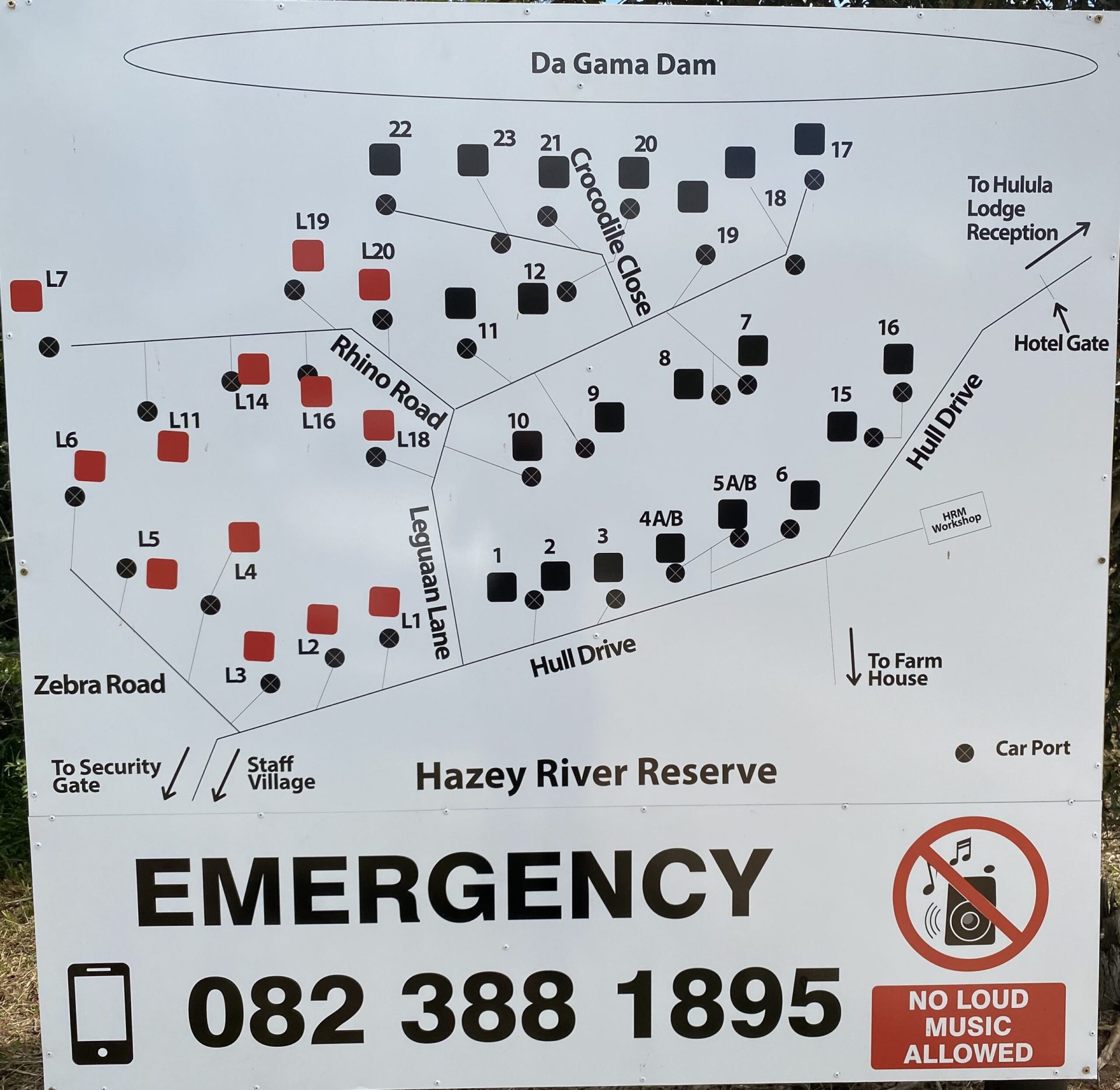
In the event of a fire or other emergency, the alarm may be raised by Security Personnel, or the Estate Manager, or a Resident by What’s App to the homeowner’s group, or by the sounding of a warning siren. Please pay attention to the warning issued. If you become aware of any fire or emergency please immediately contact the Estate Manager (066 268 6317) or Security on (082 388 1895).
Thereafter, remain calm and follow the exit procedure below:

Visitors
Emergency Numbers


Security Control Room
082 388 1895
| Mediclinic Nelspruit switchboard |
013 759 0500 |
| Mediclinic Nelspruit 24-hour emergency centre |
013 759 0645 |
| Rob Ferreira Hospital | 013 741 6100 |
| Kiaat Private Hospital emergency line |
013 590 9161 |
| ER24 | 084 124 |
| Netcare | 082 911 |
| Government hospital ambulance | 10177 |
| Hazeyview Police |
013 737 7328 |
| Fire/Rescue/ Emergency |
013 753 3019 |
| Water and Electricity |
086 003 7566 |
| Van Wettens Breakdown Services | 080 011 5200 |
| Car Towing Services | 013 753 2977 |
| TRAC N4 | 080 087 2264 |
| Parks Board (Wild animals) | 013 759 5300 |
| Snake catchers – Chris Hobkirk | 082 372 3350 |
| Snake catchers – Johan Louw | 072 299 8455 |
| Snake catchers – Barend Blom |
079 513 0425 |
| Mbombela Traffic Department | 013 759 2072 |
| Poison info centre | 082 491 0160 |
Conservation
Coexisting with wildlife is an important aspect of maintaining a healthy ecosystem. Humans and wildlife have coexisted for thousands of years, but as human populations expand and urban areas encroach on natural habitats, it is increasingly important that people respect and protect wildlife by not altering their behaviors through feeding or domesticating them.
Feeding wild animals can create a dependency on humans for food, which can lead to aggressive behavior towards people and other animals. It can also lead to the spread of diseases that may be harmful to both animals and humans. When wild animals become accustomed to humans, they may lose their natural fear of people and begin to rely on them for survival. This can lead to an increase in dangerous interactions between humans and wildlife.
Similarly, domesticating wild animals can have serious consequences. Wild animals are not meant to live in captivity, and they often suffer both physically and mentally when they are removed from their natural habitats. Domesticated animals may also become aggressive towards humans and other animals, and may spread diseases that are harmful to both wildlife and people.
In addition to the dangers of feeding and domesticating wild animals, altering their behaviors can also have negative effects on the environment. For example, feeding birds can lead to an overpopulation of certain bird species, which can lead to a decline in other bird populations that compete for the same resources. Feeding wild animals can also lead to the spread of invasive species, which can disrupt natural ecosystems and harm native species.
To coexist with wildlife in a respectful and responsible manner, it is important that people avoid feeding and domesticating wild animals. Instead, people should take steps to protect and preserve natural habitats, such as reducing their impact on the environment through sustainable living practices and supporting conservation efforts. This can help ensure that wildlife populations continue to thrive in their natural habitats, and that humans can continue to enjoy the beauty and diversity of the natural world.
Dangerous Snakes

Walking Trails
Security
Spes-Plan Security was first operated from a rented property in De Rust, on the outskirts of Hazyview, in 1996. The Bon Repose Farm, 1 Km on the Graskop Road, was bought in 1999 by LG Hibbert and BH Hibbert in order to move to more suitable premises which is closer to its client base, as well as to be able to expand the operations of Spes-Plan to include facilities for Safety and Security Training.
Staff
Evacuation Plan